
By Coach Rishabh · December 19, 2016 · 6 min read
Almonds are a very popular tree nut which contains loads of nutrients and nourishment for the body. They are not just rich and healthy but also a very tasty choice to snack on.
A small handful (1 ounce, 28 grams) serving of almonds contains:
- Energy: 161 kcal.
- Total Carbohydrates: 6 grams
- Fiber: 3.5 grams.
- Protein: 6 grams.
- Fat: 14 grams (9 of which are monounsaturated).
- Vitamin E: 37% of the RDA.
- Manganese: 32% of the RDA.
- Magnesium: 20% of the RDA.
- They also contain adequate levels of Phosphorus (137 mg), Vitamin B2 (riboflavin, 0.287mg) and Copper (0.282mg).
Almonds are also the least acid forming of all nuts. They’re an integral part of Indian household savories and sweet dishes like kheer and halwa. They’re one of the most commonly found and loved nuts.

Almonds And Digestion
Almonds contain phytic acid. It’s an enzyme inhibitor that binds certain minerals and prevents them from being absorbed (Schlemmer). This means that the amount of iron, zinc, and calcium you get from the almonds will be reduced to a certain extent. However, the story is a bit more complicated than that, because phytic acid also has a number of health benefits (Graf; Felix; Vucenik) . Those at risk of mineral deficiency should diversify their diets and not include high-phytate foods like seeds, grains, legumes, and nuts in all meals.
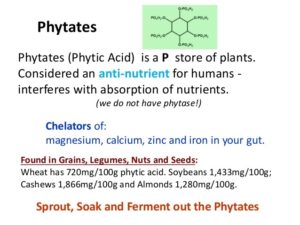
Phytic acid in almonds is contained in their brown skin. Eating almonds without removing the skin limits the nutrients your body can absorb and makes the almond difficult to digest. Soaking makes the almond shed its skin and release its enzymes. This applies to most nuts and seeds.
Also, the bulk of antioxidants in almonds are largely concentrated in its brown skin which gets destroyed in the commercial blanching of almonds (Garrido). The benefits of almonds can be increased further by sprouting them. Sprouted almonds are softer, moister and sweeter as well as being easier to digest. Sprouting is also the only way to release lipase, an enzyme which digests fat. To sprout almonds follow the below steps:
- Soak the almonds for 10 to 12 hours.
- Rinse and place them in a glass jar with a lid in the refrigerator.
- Wait for one to three days for the almonds to sprout.
- Expect a 1/8-inch sprout to grow.
A Nutritional Powerhouse
 Almonds are rich in nutrients like vitamin E, dietary fibers, omega 3 fatty acids, and proteins. They’re high in protein so they keep you full for longer and they’re rich in manganese which helps strengthen bones and regulate blood sugar. They’re extremely helpful for those with blood pressure problems and also help muscle and nerve function. Few of the benefits of this power food are detailed below:
-
Almonds are one of the best food sources of Vitamin E.
Vitamin E is a group of compounds which are fat soluble antioxidants. These antioxidants tend to build up in cell membranes in the body and protect the cells from oxidative damage. Sufficient intake of Vit. E has shown to lower rates of Heart disease, Cancer and Alzheimer’s disease (Stampfer; Heinonen; Bostick; Sano).
-
Almonds contain plenty of magnesium.
Magnesium is an important mineral which is essential for a wide variety of metabolically important reactions. Magnesium deficiency is surprisingly common but is sometimes either undetected or overlooked. Hard working athletes usually take zinc and magnesium supplements. Studies have shown the benefits of Mg in metabolic syndrome, type II diabetes and high blood pressure (Rodríguez; Mooren; Guerrero-Romero).
-
Almonds can significantly reduce oxidized LDL and can lead to reductions in LDL Cholesterol.
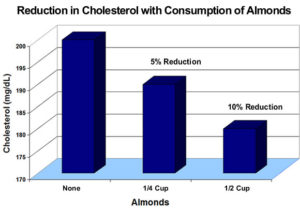 High LDL level is a known heart disease risk factor. Almonds do more than just lower LDL levels in the blood. They also protect the LDL from oxidation, which is a crucial step in the heart disease process. The skin of almonds is rich in polyphenol antioxidants, which have been shown to prevent oxidation of cholesterol in test tubes and animal studies (Chen; Wien).
-
Almonds are fabulously effective for Fat Loss.
Almonds are low in carbs, but high in protein and fiber. Studies show that eating almonds can increase satiety and help you eat fewer calories (S Y Tan). Combined with the hunger-fighting properties, it makes sense that they are a great addition to a healthy fat loss plan.
References
- Bostick RM, Potter JD, McKenzie DR, Sellers TA, Kushi LH, Steinmetz KA, Folsom AR. Reduced risk of colon cancer with high intake of vitamin E: the Iowa Women’s Health Study. Cancer Res. 1993 Sep 15;53(18):4230-7.
- Chen CY, Milbury PE, Lapsley K, Blumberg JB. Flavonoids from almond skins are bioavailable and act synergistically with vitamins C and E to enhance hamster and human LDL resistance to oxidation. J Nutr. 2005 Jun;135(6):1366-73.
- Felix Grases, Antonia Costa-Bauza, and Rafel M Prieto. Renal lithiasis and nutrition. Nutr J. 2006; 5: 23.
- Garrido I, Monagas M, Gómez-Cordovés C, Bartolomé B. Polyphenols and antioxidant properties of almond skins: influence of industrial processing. J Food Sci. 2008 Mar;73(2):C106-15.
- Graf E, Empson KL, Eaton JW. Phytic acid. A natural antioxidant. J Biol Chem. 1987 Aug 25;262(24):11647-50.
- Guerrero-Romero F, Rodríguez-Morán M. The effect of lowering blood pressure by magnesium supplementation in diabetic hypertensive adults with low serum magnesium levels: a randomized, double-blind, placebo-controlled clinical trial. J Hum Hypertens. 2009 Apr;23(4):245-51.
- Heinonen OP, Albanes D, Virtamo J, Taylor PR, Huttunen JK, Hartman AM, Haapakoski J, Malila N, Rautalahti M, Ripatti S, Mäenpää H, Teerenhovi L, Koss L, Virolainen M, Edwards BK. Prostate cancer and supplementation with alpha-tocopherol and beta-carotene: incidence and mortality in a controlled trial. J Natl Cancer Inst. 1998 Mar 18;90(6):440-6.
- Mooren FC, Krüger K, Völker K, Golf SW, Wadepuhl M, Kraus A. Oral magnesium supplementation reduces insulin resistance in non-diabetic subjects – a double-blind, placebo-controlled, randomized trial. Diabetes Obes Metab. 2011 Mar;13(3):281-4.
- Rodríguez-Morán M, Guerrero-Romero F. Oral magnesium supplementation improves insulin sensitivity and metabolic control in type 2 diabetic subjects: a randomized double-blind controlled trial. Diabetes Care. 2003 Apr;26(4):1147-52.
- Sano M, Ernesto C, Thomas RG, Klauber MR, Schafer K, Grundman M, Woodbury P, Growdon J, Cotman CW, Pfeiffer E, Schneider LS, Thal LJ. A controlled trial of selegiline, alpha-tocopherol, or both as treatment for Alzheimer’s disease. The Alzheimer’s Disease Cooperative Study. N Engl J Med. 1997 Apr 24;336(17):1216-22.
- Schlemmer U, Frølich W, Prieto RM, Grases F. Phytate in foods and significance for humans: food sources, intake, processing, bioavailability, protective role and analysis. Mol Nutr Food Res. 2009 Sep;53 Suppl 2:S330-75.
-
S Y Tan and R D Mattes. Appetitive, dietary and health effects of almonds consumed with meals or as snacks: a randomized, controlled trial. European Journal of Clinical Nutrition (2013) 67, 1205–1214.
-
Vucenik I, Shamsuddin AM. Protection against cancer by dietary IP6 and inositol. Nutr Cancer. 2006;55(2):109-25.
-
Wien M, Bleich D, Raghuwanshi M, Gould-Forgerite S, Gomes J, Monahan-Couch L, Oda K. Almond consumption and cardiovascular risk factors in adults with prediabetes. J Am Coll Nutr. 2010 Jun;29(3):189-97.
Related reading
Get new posts like this by email