
By Coach Rishabh · December 15, 2016 · 5 min read
What if I tell you that there’s a ‘secret’ technique which can increase your strength immediately like a wizard’s magic.
This statement will grab your attention.
Though your common sense will tell you that such a thing is pretty much unlikely. After-all improvements in strength and muscles take months and years to end with consistent effort and planning. Even stuff like steroids takes some time to build up and show effect, definitely not at all instantly.
It sounds to you more like a marketing gimmick than some actual strength practice. Right?
Well, it’s not your fault. It does sound cheesy, but if I tell you that this ‘secret’ technique is deeply rooted in science. And there’s solid research backing to prove its efficacy and validity.
Now it will make you burn with curiosity.
Be ready to get your mind blown away.
The Magic Unfolds
Any sufficiently advanced technology is indistinguishable from magic.
—Arthur C. Clarke
The goal of strength & conditioning professionals, coaches, and sports research is to increase the short and long term effects of strength training on a lifter’s performance. Hence these experts keep scouring endless techniques and strategies of performance enhancement and training.
Most of the techniques they find significantly efficacious involve improved motor unit recruitment, firing rate, activation of synergists, & reduced inhibition of Golgi tendon organ, and Postactivation potentiation or PAP (Hilfiker, R et al.).
PAP had gained lots of traction recently in the strength training community due to its proposed capability to raise performance as compared to methods without using PAP (Robbins, D.W).
The performance in weightlifting, sprinting, jumping and throwing activities is shown to increase significantly with this phenomenon (French, D.N. et al.; Hilfiker, R. et al.).
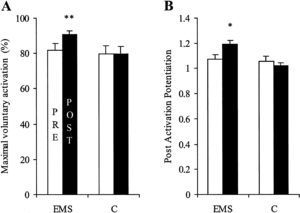
The basic principle behind the PAP is that high degree of CNS stimulation from prior heavy loading results in greater force production and motor unit recruitment. It lasts anywhere from five to thirty minutes (Chiu, L.Z. et al; Rixon, K.P. et al.). There are two theories suggested to explain the PAP phenomenon:
- Increased phosphorylation theory (Hamada, T. et al; Rixon; Chiu)
- Hoffmann Reflex theory (Hodgson, M. et al.)
I won’t get into the explanations behind these theories to save you some gray matter and keep the post length within the limit. If you’re really interested you can visit the links in the reference list provided at the end for more information.
Let’s move to the good stuff.
‘Secret’ Technique
All men can see these tactics whereby I conquer, but what none can see is the strategy out of which victory is evolved.
—Sun Tzu
Formulating a successful strategy out of the clinical findings, anecdotal evidence, and experience is where the real wizardry lies. You can discuss theories & science all day but the rubber meets the road only when you propose something of practical value.
I had developed quite a few strategies to successfully apply PAP to practical means.
Let me share with you my ‘secret’ technique to get stronger instantly.
Supra-Maximal Overload
One of the most proficient methods to experience the instantaneous strength benefit of PAP is the Supra-maximal Overload.
This method is best suited for hypertrophy purpose on multi-joint exercises like bench press or squats.
In this method, a supramaximal load of around 110 to 125 percent of your max is used prior to your work set with 75 to 80 % of max for AMRAP*.
AMRAP* = As Many Reps As Possible
You hold the supra-maximal weight at just short of lock-out for about 10 secs.
Follow that with your work set, and you’ll be able to rep out 3 to 5 reps more than usual with the same weight.
The instantaneous performance increase will surprise you pleasantly. Heavy overload increases the neural drive, activates the Postactivation potentiation, and makes the work set weight feel lighter in comparison.
This was also the secret technique of the legendary Chuck Sipes who used it exclusively to boost his bench press prowess.
Now, go to the gym and try it.
Bonus: Progressive Partials
Let me provide you with something extra to munch on and get even stronger in the long run.
This method is used strictly for strength.
In this method, an overload of roughly 105 to 110 percent is utilized to perform partial reps in the topmost range of motion.
Over the next few weeks, you progress by increasing the range of motion gradually until you’re performing a full rep with the overload.
This method works by desensitizing the protective mechanisms as you work with an overload over an extended period.
The great Paul Anderson frequently used this method for his infamous squat lift.
References
- Chiu, L.Z., Fry, A.C., Weiss, L.W., Schilling, B.K., Brown, L.E., & Smith, S.L. (2003). Postactivation potentiation response in athletic and recreationally trained individuals. Journal of Strength and Conditioning Research. 17(4), 671-677.
- French, D.N., Kraemer, W.J., & Cooke, C.B. (2003). Changes in dynamic exercise performance following a sequence of preconditioning isometric muscle actions. Journal of Strength and Conditioning Research, 17 (4), 678-685.
- Hamada, T., Sale, D.G., & MacDougall, J.D. (2000). Postactivation potentiation in endurance-trained male athletes. Medicine & Science in Sports & Exercise, 32(2), 403- 111.
- Hamada, T., Sale, D.G., MacDougall, J.D., & Tarnopolsky, M.A. (2000a). Postactivation potentiation, muscle fiber type, and twitch contraction time in human knee extensor muscles. Journal of Applied Physiology, 88, 2131-2137.
- Hilfiker, R., Hubner, K., Lorenz, T. & Marti, B. (2007). Effects of drop jumps added to the warm-up of elite sport athletes with a high capacity for explosive force development. Journal of Strength and Conditioning Research, 21(2), 550-555.
- Hodgson, M., Docherty, D., & Robbins, D. (2005). Post-activation potentiation underlying physiology and implications for motor performance. Sports Medicine, 25 (7), 385-395.
- Robbins, D.W. (2005). Postactivation potentiation and its practical applicability: a brief review. Journal of Strength and Conditioning Research, 19(2), 453-458.
- Rixon, K.P., Lamont, H.S., & Bemden, M.G. (2007). Influence of type of muscle contraction, gender, and lifting experience on postactivation potentiation performance. Journal of Strength and Conditioning Research, 21(2), 500-505.
Related reading
Get new posts like this by email
The techniques given are very effective and very nicely explained. I found this article very informative.
Pingback: How To Increase Strength - ISST