By Coach Rishabh · December 10, 2016 · 2 min read
Squats or Deep Knee Bends, as old timers used to call them, are famous for fortitude building in men. The reputation of Squats as man-maker and strength developer is incontestable. Squats also have a penchant for destroying egos of gym bros and punks whenever asked to perform to a legit depth.
It is a total body exercise and elicits a bigger anabolic response than all of the leg extensions and curls combined.
Nothing builds as much toughness and character as a 20 Rep Squats set with a crushing load over your back, and not giving up until done.
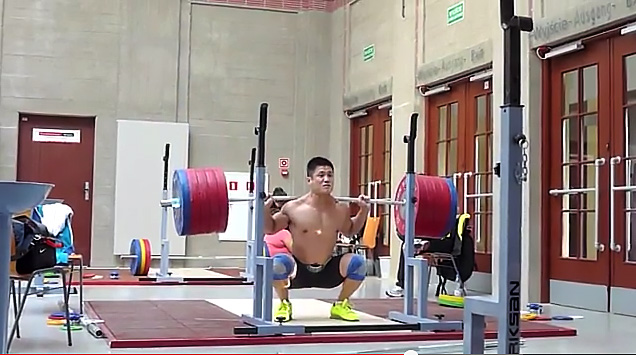
It is also an integral part of Power-Lifting & Olympic Weightlifting training and is regarded as a supreme test of leg strength. The progression on squats positively impacts every other lift due to improvements in neural output.
Bigger Squats makes your Deadlifts stronger but vice versa is not true.
Every lifter should invest sufficient amount of his/her time in learning how to perform this exercise properly. Doing so will reap huge benefits to you in the near future not only as a lifter but as a person too.
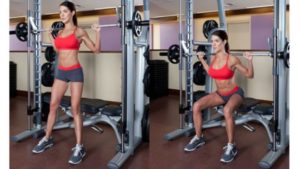
Let me tell you that Squats are not half or quarter squats; neither do Smith-machine squats are actual Squats. Some coaches wrongly preach that squats could be learned in the hierarchy, Smith-machine squats => Barbell Squats. This is incorrect. Smith-machine squats have no carryover to the Barbell squat mechanics. To learn Barbell Squats, you have to Barbell squat.
Considering the complexity of Squats and the various performance related variables, it is of great importance to learn it under the guidance of an experienced coach. A good coach will help you understand the proper squat biomechanics for attaining optimal muscle development and reducing the injury chances.
Besides, the benefits of Squats are not just restricted to athletic performance. They’ve got a huge carry over to everyday life. Squatting down 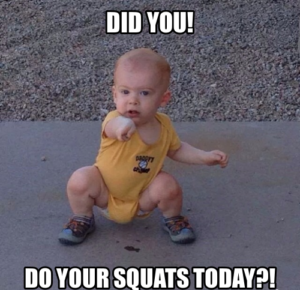 to pick or move objects/kids has a close specificity to the Squat pattern. Most of our daily chores and hobbies require the simultaneous coordination of different muscle groups across our body, and the squat is the best exercise to recruit a large number of muscle groups in a single effort. In other words, squats are great to improve the quality of your daily life.
Sources:
- Escamilla, RF, Lander, JE, and Garhammer, J. Biomechanics of powerlifting and weightflifting exercises. In: Exercise and Sport Garrett, WE and Kirkendall, DT, eds. Philadelphia, PA: Lippincott Williams and Wilkins, 2000. pp. 585–615.
- Escamilla, RF. Knee biomechanics of the dynamic squat exercise. Med Sci Sports Exerc 33: 127–141, 2001.
- Isear, JA Jr, Erickson, JC, and Worrell, TW. EMG analysis of lower extremity muscle recruitment patterns during an unloaded squat. Med Sci Sports Exerc 29: 532–539, 1997.
- Stoppani, J. Encyclopedia of Muscle and Strength. Champaign, IL: Human Kinetics Publishers, 2006. pp. 151.
- Watkins, J. Structure and Function of the Musculoskeletal System. Champaign, IL: Human Kinetics Publishers, 1999.
Related reading
Get new posts like this by email